
Not Happy with Your Current Malaysia Authorized Representative?

Already have your medical devices registered in Malaysia but are dissatisfied with your current Authorized Representative (AR)? You may have more options than you think. Once your product is registered with the Medical Device Authority (MDA), your Malaysian AR becomes an important part of maintaining market access and supporting your ongoing regulatory responsibilities. But what happens when communication becomes difficult, responses are too slow, or your AR is closely tied to a particular importer or distributor? You may also feel that your current regulatory partner is not providing the level of expertise, flexibility, or post-market support your business needs. You may be wondering whether changing your AR means going through the entire product registration process again. The good news is that changing your AR does not necessarily mean starting your product registration from scratch. Subject to the agreement between the current AR and the overseas manufacturer, existing product registrations may be transferred to a newly appointed AR by following the prescribed MDA procedure. For manufacturers who want to maintain their existing Malaysian market access while improving regulatory support and commercial flexibility, appointing an independent Authorized Representative may be worth considering. Eight Signs That It May Be Time to Change Your Authorized Representative 1. Lack of communication Effective communication is fundamental to a successful regulatory partnership. Your AR should be able to explain regulatory requirements, clarify MDA-related matters, provide updates on ongoing submissions, and communicate issues that may affect your products in Malaysia. When communication becomes inconsistent or unclear, manufacturers may struggle to understand the status of their regulatory obligations. Simple questions may remain unanswered, important updates may be overlooked, and decisions may be delayed because the necessary information is unavailable. For overseas manufacturers, particularly those managing their Malaysian business from another country, reliable communication is even more important. Your AR should be a dependable regulatory contact, not another source of uncertainty. 2. Dependency on a particular distributor Some manufacturers appoint an AR through an existing importer or distributor relationship. This arrangement may be convenient and cost effective when entering the Malaysian market, especially when the distributor initially introduces the manufacturer to the local regulatory process. However, the arrangement can become restrictive if the AR and distributor operate in a way that makes the manufacturer’s regulatory representation difficult to separate from its commercial relationship. For example, you may want to appoint another distributor to develop new market segments, serve different customer groups, or improve geographical coverage. Yet you may feel that changing your commercial partner could also jeopardize your regulatory arrangements. Your AR relationship should be structured with your long-term interests in mind. An independent AR can provide a clearer separation between regulatory representation and distribution, allowing the manufacturer to evaluate commercial partners according to business considerations while maintaining appropriate regulatory oversight. 3. Slow response and delayed action In Malaysia medical device regulation, delays can have practical consequences. You may need clarification on product registration, assistance with a regulatory notification, support for a distributor’s documentation, or guidance when responding to an MDA request. If your AR takes too long to respond, your team may struggle to coordinate internal departments, meet project timelines, or provide timely information to your Malaysian business partners. The problem is not simply the time taken to reply to an email. It is whether your AR has a clear process for managing requests, prioritizing urgent matters, following up on outstanding actions, and keeping you informed. A professional regulatory partner should establish clear communication channels, realistic response expectations, and appropriate escalation procedures. 4. Limited market access and commercial flexibility Product registration is only one part of developing a successful Malaysian business. Manufacturers may need to work with multiple importers or distributors to reach hospitals, clinics, laboratories, specialist customers, or different geographical markets. They may also want to change their sales strategy as the business develops. If your regulatory arrangements are closely linked to a single commercial partner, expanding your distribution network may become unnecessarily complicated. An independent AR arrangement can help separate regulatory representation from individual distribution relationships, subject to the applicable regulatory requirements and contractual arrangements. This gives manufacturers greater flexibility to evaluate potential partners and develop their market presence without treating every commercial change as a reason to reconsider their entire regulatory strategy. 5. Difficulty changing distributors Business relationships change. A distributor may not achieve the expected sales performance, may lack the resources to develop the market, or may no longer align with your company’s objectives. You may also identify a new partner with stronger market coverage, better customer relationships, or a more suitable business model. However, changing distributors can become stressful if your existing AR arrangement is closely connected to the outgoing distributor. Before entering into any AR or distribution agreement, manufacturers should understand who controls the regulatory relationship, who holds the relevant registration, what happens when an appointment ends, and which regulatory steps are required when changing the parties involved. If your current arrangement makes a distributor change difficult, it may be time to reconsider the structure of your Malaysian regulatory representation. Your commercial strategy should not be unnecessarily constrained by the way your regulatory representation is organized. 6. Lack of regulatory expertise Medical device regulatory requirements do not end when a product is registered. Manufacturers may need assistance with registration maintenance, changes to product information, establishment and distributor documentation, post-market surveillance, adverse-event reporting, field safety corrective actions, and other regulatory obligations. An AR that provides limited regulatory guidance may leave the manufacturer uncertain about what to do, when action is required, and which responsibilities belong to each party. This can be particularly challenging for overseas manufacturers that do not have an in-house Malaysian regulatory team. Your AR should understand the relevant Malaysian regulatory framework, recognize when an issue requires further assessment, and coordinate with the manufacturer to support appropriate and timely action. Where a matter falls outside the AR’s expertise, the AR should communicate the limitation and help identify the appropriate next step.For a clearer understanding of the support your regulatory partner should
How a Chinese Medical Device Manufacturer Enters Malaysia Market?
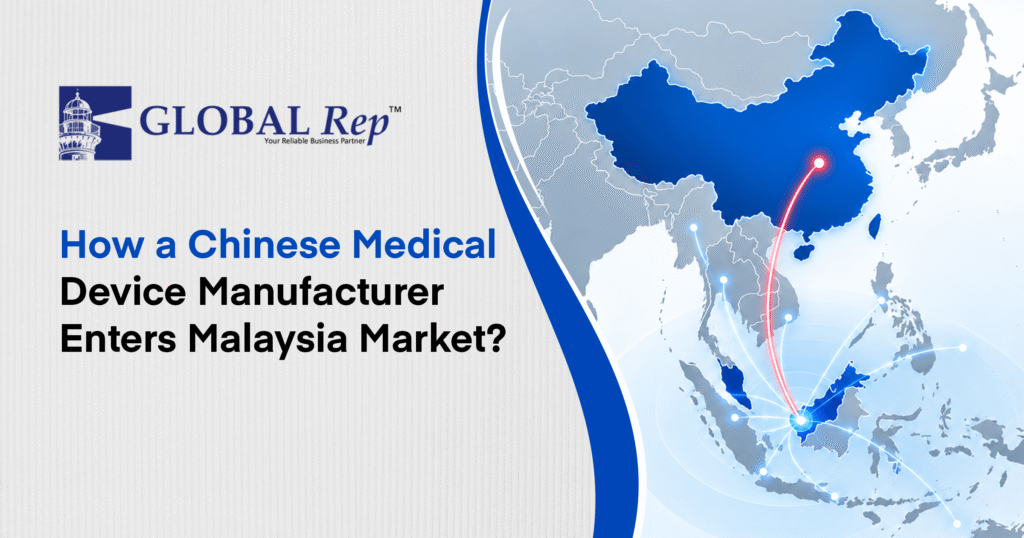
In “Which Southeast Asian Country Should You Enter First? A Medical Device Manufacturer’s Guide”, we highlighted Malaysia as an attractive starting point for foreign medical device manufacturers looking to establish a presence in Southeast Asia without immediately committing significant resources to a large regional operation. Also, Malaysia can provide a practical platform for manufacturers to gain market experience, establish local partnerships, and build a foundation for broader expansion across the ASEAN region. In “Your China–Malaysia Medical Device Regulatory Bridge”, we explored the key similarities and differences between China and Malaysia’s medical device regulatory frameworks, focusing on establishment requirements, pre-market clearance, and post-market surveillance. In this blog, we share 4 key steps to help foreign medical device manufacturers enter the Malaysian market. Appoint authorized representative Register your product Appoint importer and distributor Market product 1. Appoint authorized representative If you are a foreign medical device manufacturer, appoint a Malaysia-based Authorized Representative (AR) to represent you in Malaysia. Under Malaysia’s Medical Device Act 2012, a foreign manufacturer is required to appoint an AR residing in Malaysia to act on its behalf in relation to its medical devices. The AR plays an important role in managing and maintaining the manufacturer’s regulatory obligations in Malaysia, including pre-market registration, marketing compliance, regulatory communication, and post-market surveillance. For a detailed explanation, see our article “What Does a Local Authorized Representative Do for Medical Devices?”, where we explain the key responsibilities of a Malaysian AR. Foreign manufacturers generally have two options when appointing an AR: Appoint an independent Authorized Representative, or Appoint a local distributor who also acts as the Authorized Representative. In our article “Medical Device Registration Holder Options: Local Authorized Representative vs Distributor”, we explore these two approaches and discuss the potential advantages of appointing an independent Authorized Representative, particularly when the manufacturer wants greater control over its regulatory affairs, commercial strategy, and choice of distributors. 2. Register your product Under the Medical Device Act 2012, medical devices must be registered with the Medical Device Authority (MDA) before they can be marketed in Malaysia. As your independent Authorized Representative, Global Rep provides end-to-end support for Malaysia medical device registration with the MDA. We assess and classify your device, determine the appropriate registration pathway, identify the applicable regulatory requirements, and review and compile the required technical documentation. We then coordinate with the Conformity Assessment Body (CAB) throughout the conformity assessment process and liaise with the MDA during the registration evaluation, supporting you in addressing regulatory queries and requirements through to completion. We work closely with the manufacturer to address questions, close documentation gaps, and respond to CAB and MDA requirements until the medical device registration is successfully completed. For a detailed overview of the process, please visit “Navigating Malaysia’s Medical Device Registration Process”. 3. Appoint importer and distributor In addition to appointing an Authorized Representative, medical device importers and distributors in Malaysia must also be appropriately licensed by the Medical Device Authority (MDA). As your independent Authorized Representative, Global Rep can support the appointment of your preferred importers and distributors This process may be carried out immediately upon AR designation or at a later stage, depending on your commercial strategy. Malaysian regulations allow a medical device to be supplied through multiple importers and distributors, providing manufacturers with greater flexibility in developing their distribution channels and reducing reliance on a single commercial partner. Before an appointment is made, we assess the proposed importer or distributor by reviewing its company legitimacy, establishment license, and regulatory compliance status. For qualified candidates, we establish a regulatory compliance agreement that clearly defines their regulatory responsibilities and obligations before issuing the Letter of Authorization (LOA). This approach adds value by helping manufacturers establish a compliant, well-controlled, and sustainable supply chain, while providing greater flexibility to expand their distribution network without compromising regulatory oversight. As your independent Authorized Representative, Global Rep remains focused on protecting your regulatory interests while supporting the development of a reliable and sustainable Malaysian distribution network. 4. Market product Upon completion of Steps 1 to 3, the manufacturer may legally market its medical devices in Malaysia. During the marketing phase, Global Rep, as your independent Authorized Representative (AR), continues to act on behalf of the foreign medical device manufacturer in Malaysia, ensuring the maintenance of device registrations and remaining prepared to undertake post‑market surveillance responsibilities. Why Choose Malaysia as Your Gateway to ASEAN Healthcare? Malaysia is a great market to launch your innovations, and a good base for you to expand your business in this region. In “Malaysia: Your Gateway to ASEAN Healthcare Growth”, we shared that Malaysia stands out as a prime destination for healthcare investment in ASEAN. With a robust healthcare market, strong infrastructure, and political stability, it offers both affordability and innovation. Its medical tourism sector continues to expand, supported by advanced facilities and the Malaysia Healthcare Travel Council (MHTC). Strategic initiatives like the World Health Expo Kuala Lumpur further connect investors to regional opportunities, making Malaysia a thriving hub for healthcare growth and partnerships. Plan Your Malaysia Market Entry with Global Rep To secure your market share in this region, it is essential to engage a reliable regulatory affairs service provider. Global Rep can serve as your trusted business partner. By working with us, you can rely on our expertise in pre‑market clearance, registration maintenance, and post‑market surveillance. We invite you to book a complimentary consultation session to discuss your plans in detail.
ISO 13485 Standard in Everyday Terms
ISO 13485 is an international rulebook that ensures medical devices—from simple surgical gloves and thermometers to complex MRI machines and pacemakers—are safe, effective, and made consistently. Think of it as a golden safety and quality recipe for companies that design, build, or service medical equipment. Key Ideas Quality Control: Companies must write down every step of how they make their product and then follow those steps every single time. No guessing or cutting corners. Risk Management: Manufacturers must actively look for what could go wrong (e.g., What if this syringe needle breaks? or What if this patient monitor gives a false reading?) and fix the design to eliminate the risk, if possible or use any effective way to mitigate the risk as low as possible before it hurts a patient. Traceability: Manufacturers must establish and maintain comprehensive records. In the event a batch of heart valves is found defective, the company must be able to trace each valve — including its origin, the hospitals that received it, and the raw materials used in its production. Regulatory Approval: Although ISO 13485 standard is a voluntary international standard, certification demonstrates to health regulators that a company prioritizes safety. In many jurisdictions, however, ISO 13485 has been adopted as a mandatory prerequisite for obtaining medical device pre‑market clearance. ISO 13485 a mandatory regulatory requirement The global authorities that mandate, explicitly require, or directly incorporate ISO 13485 standard into their legal frameworks include: Americas United States – Food and Drug Administration (FDA): Under the Quality Management System Regulation (QMSR), the FDA officially transitioned away from its historic Quality System Regulation (21 CFR Part 820). The current QMSR explicitly incorporates ISO 13485:2016 by reference. Compliance with the core standard is now a strict legal condition for U.S. market access. Canada – Health Canada: Health Canada strictly mandates ISO 13485 certification for all medical device manufacturers selling Class II, III, and IV devices. This is enforced via the Medical Device Single Audit Program (MDSAP). Brazil – Agência Nacional de Vigilância Sanitária (ANVISA): Brazil utilizes MDSAP audits built directly on ISO 13485 compliance to grant regulatory QMS approvals. Europe and the United Kingdom European Union – European Medicines Agency (EMA) & Competent Authorities: ISO 13485 is a harmonized standard under the EU Medical Device Regulation (MDR 2017/745) and In Vitro Diagnostic Regulation (IVDR 2017/746). While EU law phrases it as a generic QMS requirement, Notified Bodies treat ISO 13485 certification as the mandatory prerequisite to achieve a CE Mark for medium-to-high risk devices. United Kingdom – Medicines and Healthcare products Regulatory Agency (MHRA): The UK MDR 2002 explicitly mirrors harmonized standards, mandating ISO 13485 for obtaining UKCA marking and entering the British market. Asia-Pacific Malaysia – Medical Device Authority (MDA): The authority requires ISO 13485 certification, together with complete technical documentation, as a mandatory prerequisite for both local and foreign manufacturers seeking medical device pre‑market clearance in Malaysia. Japan – Ministry of Health, Labour and Welfare (MHLW) & PMDA: The Japanese Quality Management System (MHLW Ordinance No. 169) aligns identically with ISO 13485. Proof of conformity is required for marketing authorization. Australia – Therapeutic Goods Administration (TGA): The Therapeutic Goods framework directly mandates adherence to ISO 13485 to obtain entry into the Australian Register of Therapeutic Goods (ARTG). Singapore – Health Sciences Authority (HSA): Manufacturers, wholesale suppliers, and importers must strictly operate under an ISO 13485-compliant QMS as outlined by the SAC ISO 13485 accreditation scheme. India – Central Drugs Standard Control Organisation (CDSCO): Incorporates the standard as a compulsory mandate for companies looking to register, manufacture, or import Class B, C, and D medical devices. Middle East & Africa Saudi Arabia – Saudi Food and Drug Authority (SFDA): Mandates an ISO 13485 quality structure coupled with enhanced post-market surveillance constraints for local and foreign manufacturers. South Africa – South African Health Products Regulatory Authority (SAHPRA): Requires all medical device manufacturers, local importers and distributors to hold valid ISO 13485 certification from recognized certification bodies. ISO 13485 certification is now a mandatory requirement for manufacturers seeking to market their medical devices in the countries listed above. Before placing their medical devices on the market, manufacturers must implement a quality management system that complies and obtain ISO 13485 certification from an accredited certification body. This process can be complex and demanding, and inadequate or poorly designed quality management systems may hinder long-term regulatory compliance, operational effectiveness, and sustainability. Further insights about ISO 13485 standard and certification: ISO 13485 Certification: Your Gateway to Medical Device Market Access. Build Confidence with ISO 13485 Compliance Global Rep’s experts have extensive experience in establishing ISO 13485‑compliant quality management systems. We are fully competent in guiding you through system setup, training your staff, and supporting you during certification audits. Beyond certification, we provide ongoing support to maintain compliance through additional training, implementation consultancy, internal audits, and periodic performance reviews. Please contact us today to understand more.
Your China–Malaysia Medical Device Regulatory Bridge

For a Chinese medical device manufacturer planning to enter Malaysia, the NMPA and MDA systems are similar in their risk-based approach, but the registration pathway, classification, conformity assessment and role of the local stakeholders are materially different. Below is a practical comparison based on the current requirements: Market-entry requirement China Malaysia Regulatory authority NMPA MDA Product classification Class I, II, III Class A, B, C, D Foreign manufacturer’s local representative Required – overseas applicant must appoint a domestic Chinese enterprise legal person as agent Required – foreign manufacturer must appoint a local Independent Authorized Representative (AR) Local representative’s role Acts as regulatory agent for registration/filing and assists the overseas registrant in fulfilling legal obligations Acts as the manufacturer’s regulatory representative and is responsible for registration and regulatory obligations under Act 737. Product approval Class I: filing; Class II & III: registration Class A, B, C, D require MDA registration before being placed on market Who submits product registration Overseas manufacturer/applicant through its Chinese legal-entity agent Malaysian AR on behalf of the foreign manufacturer Regulatory pathway for foreign devices Class I filing; Class II & III registration by NMPA Conformity assessment by CAB; Registration by MDA; Class A: Exempt CAB conformity assessment Evidence of approval in country of origin Generally, imported devices require a marketing certificate from the competent authority of the country/region where applicant or manufacturing site is located, subject to exceptions No general requirement equivalent to China’s imported-device marketing-certificate requirement; MDA has its own conformity-assessment/registration framework Local establishment licence No Require licensed AR, importer and distributor Importer requirement Importer operates within China’s import/trade framework; the NMPA registration agent is the key regulatory local entity Importer must hold an MDA establishment licence and be appointed by the AR Distributor requirement for market entry Not a separate NMPA product-registration prerequisite in the same way as Malaysia’s establishment licensing system Distributor must hold an MDA establishment licence and be appointed by the AR Language Documents must be submitted in Chinese; foreign originals are also provided where applicable Documents must be submitted in Malay or English; foreign originals are also provided where applicable Clinical evaluation Require for Class II & III Require for Class B, C and D QMS China Medical Device GMP; ISO13485 is not mandatory ISO 13485 mandatory for all Class A, B, C & D, except some class A devices Can the foreign manufacturer enter directly? No, requires a Chinese domestic enterprise legal-entity agent for imported-device registration/filing No, foreign manufacturer needs a Malaysian AR Main market-entry bottleneck NMPA product registration, particularly Class II/III Product registration plus local establishment licensing structure Regulatory reliance Primarily NMPA’s own evaluation framework MDA has increasingly adopted reliance/verification mechanisms Online system NMPA registration systems MeDC@St Recognize foreign pre-market clearance? Yes, as supporting evidence Yes, for recognised foreign authorities under the verification pathway Further reference about NMPA vs MDA — Recognition of Foreign Pre-Market Approval. Further reference about Malaysia Medical Device Regulatory Affairs: Overview of Regulatory Framework and Requirements. Enter Malaysia with the Right Regulatory Partner Global Rep is trusted by many Chinese manufacturers as their local authorized representative for medical devices in Malaysia, securing medical device registrations for market entry. We evaluate and appoint importers and distributors, manage postmarket surveillance, and maintain registrations to ensure ongoing compliance. As your reliable business partner, Global Rep empowers you to enter and expand in Malaysia while giving you flexibility in shaping your marketing strategy. Still unsure what is required? Book a complementary 30 minutes market entry review session with us.
China NMPA vs Malaysia MDA — Recognition of Foreign Pre-Market Approval

Recognition of foreign pre-market approvals is a clear and growing global trend in medical-device regulation. The terminology varies—regulatory reliance, abridged review, verification, recognition of overseas assessments, etc.—but the underlying principle is the same: Regulators increasingly leverage the work already performed by trusted foreign regulators instead of repeating the entire assessment from scratch. Historically, a manufacturer entering each country generally had to undergo a separate national regulatory assessment: Foreign approval → New national assessment → New national approval The emerging model is: Trusted foreign approval → Reliance / verification / abridged review → Faster national market access This is being driven by the need to reduce regulatory duplication, shorten time-to-market, conserve regulatory resources and improve patient access. However, this concept has yet to be fully accepted by many authorities. The following comparison highlights a key difference between China NMPA and Malaysia MDA in their treatment of foreign pre-market approvals. Aspect China NMPA Malaysia MDA Accepts foreign pre-market approval? Yes, as supporting evidence Yes, for recognised foreign authorities under the verification pathway Does foreign approval replace local approval? No No Can foreign approval reduce local assessment? No Yes Formal verification/reliance pathway? No Yes Foreign authorities recognised? Foreign competent-authority marketing certificate is required for imported devices, as supporting evidence Yes. MDA maintains a defined list of recognised competent authorities Use of foreign technical/clinical evidence Yes, subject to NMPA requirements Yes, through verification of evidence Local conformity assessment repeated? Generally, NMPA performs its own regulatory review Full assessment can be avoided/reduced if eligible for verification Local product registration still required? Yes Yes While NMPA accepts foreign regulatory approvals as supporting evidence for imported medical devices, manufacturers must generally undergo NMPA’s own regulatory review and foreign approval does not reduce the local assessment in a broad reliance pathway. In contrast, MDA has established a formal verification pathway that allows eligible medical devices with approvals from recognised foreign regulatory authorities to leverage existing conformity-assessment evidence, potentially reducing duplication of assessment, regulatory time and cost. The eligibility criteria for accessing Malaysia’s Conformity Assessment by Way of Verification Route are set out in the Medical Device Authority (MDA) Guidance Document. In both markets, foreign approval does not replace local market authorisation; NMPA or MDA approval remains necessary before the device can be placed on the respective market. Medical device pre-market approval can be a lengthy and costly process. By recognising eligible foreign pre-market approvals, Malaysia MDA has significantly accelerated market entry and reduced regulatory costs, making Malaysia a more attractive gateway for medical device manufacturers seeking access to the Malaysian and regional market. The following table provides a comparison of the typical market-entry turnaround time and estimated regulatory costs for medical device registration under China NMPA and Malaysia MDA. China NMPA Malaysia MDA TAT CAB conformity assessment Not applicable Class B–D: 30 – 60 working days after complete submission Regulatory evaluation Class I: 5 working days Class II: 60 working days Class III: 90 working days Class A–D: 30 – 60 working days after complete submission Typical overall time Class II: ~12–24+ months Class III: ~18–36+ months Class B, C & D: ~3–5+ months Cost Regulatory evaluation Class I: Not required Class II: RMB 210,900 ≈ US$29,500 Class III: RMB 308,800 ≈ US$43,200 Class A: RM1,250 ≈ US$315 Class B: RM1,250 ≈ US$315 Class C: RM2,500 ≈ US$625 Class D: RM3,750 ≈ US$940 CAB full conformity assessment (FCA) Not applicable Class B: ~ US$3,750 Class C: ~ US$6,250 Class D: ~ US$8,750 CAB conformity assessment via verification route (VR) Not applicable Class B, C & D: ~ US$300 Estimated total market-entry cost (excluding profession regulatory affairs supports fee) Class II: ~US$30,000 Class III: ~US$50,000 Class A: ~ US$315 Class B: ~ US$4,500 (FCA)/650 (VR) Class C: ~ US$6,500 (FCA)/ 950 (VR) Class D: ~ US$10,000 (FCA)/1,250 (VR) Relative cost Higher Lower Relative speed Slower Faster In our blog, “Which Southeast Asian Country Should You Enter First?”, Malaysia is identified as a “practical regional entry point” for foreign medical device manufacturers looking to test the market, gain ASEAN experience, and establish a foundation for regional expansion. Find the Right Regulatory Pathway into Malaysia If your medical devices have already obtained pre-market clearance from an MDA-recognised reference authority, we invite you to contact Global Rep to assess your regulatory readiness and identify the most efficient pathway to enter the Malaysian and wider regional markets. With an established market portfolio and extensive experience supporting Chinese medical device manufacturers, Global Rep understands the regulatory and commercial challenges of expanding into Malaysia and ASEAN. Our practical market experience, together with positive testimonials from Chinese manufacturers we have supported, demonstrates our commitment to delivering reliable, responsive and cost-effective regulatory solutions.
Which Southeast Asian Country Should You Enter First? A Medical Device Manufacturer’s Guide

For a medical device manufacturer planning to expand into Southeast Asia, one of the first questions is often: “Which country should we enter first?” Malaysia? Singapore? Indonesia? Thailand? The Philippines? Brunei? There is no universal answer. The largest market is not necessarily the best first market. The right starting point depends on your product, regulatory status, commercial objectives, available resources, local partners and long-term regional strategy. A well-chosen first market can do more than generate your first sales. It can help you build regulatory experience, establish distribution, understand customer needs and create a foundation for expansion across Southeast Asia. Six Markets, Six Different Opportunities Southeast Asia is not one homogeneous market. Each country offers a different combination of market size, healthcare infrastructure, regulatory environment, business accessibility and strategic value. Factor Malaysia Singapore Thailand Indonesia Philippines Brunei Market opportunity Attractive Smaller Large Very large Large Small but focused Healthcare ecosystem Developed Highly developed Developed Developing Developing Developed Regulatory maturity Established Highly developed Established Developing Developing Developing / evolving Regional gateway potential High Very high High High High Limited Relative market-entry cost Accessible Higher Moderate Moderate–higher Moderate Moderate Local partner importance High High High High High Very high Market accessibility Accessible Accessible Moderate More complex Accessible Focused Strategic role Practical entry point Regional hub Mainland SEA expansion Large-market expansion English-speaking SEA market Focused, high-value market Best suited for Market testing & regional expansion Regional positioning Mainland SEA opportunities Scale & long-term growth English-speaking market development Specialised opportunities & targeted sales This following is a strategic comparison, not a ranking. The most suitable first market will vary from one manufacturer to another. Country Strategic opportunity May suit manufacturers looking to… Malaysia Practical regional entry point Test the market and build an ASEAN foundation Singapore Regional hub & highly developed healthcare market Build regional credibility and serve sophisticated customers Indonesia Large long-term opportunity Access a substantial and growing market Thailand Major mainland Southeast Asian market Develop healthcare and private-sector opportunities Philippines Large English-speaking market Build an accessible English-speaking commercial market Brunei Small, high-income market Pursue targeted opportunities with a focused strategy 1. Malaysia — A Practical Starting Point Malaysia can be an attractive starting point for foreign medical device manufacturers that want to establish a presence in Southeast Asia without immediately committing substantial resources to a large regional operation. Malaysia has an established medical device regulatory framework administered by the Medical Device Authority (MDA). A foreign manufacturer can appoint a Malaysian Authorized Representative (AR) to represent it for regulatory purposes, while licensed importers and distributors can support its commercial activities. This means a manufacturer can potentially establish a Malaysian market presence without setting up its own Malaysian company. Malaysia may therefore be particularly suitable for manufacturers that want to: test the Southeast Asian market; establish their first local regulatory presence; work with local importers and distributors; build regional experience; and use Malaysia as a foundation for subsequent ASEAN expansion. Malaysia is also becoming increasingly relevant from a regulatory-reliance perspective, making it important for manufacturers to assess how existing international approvals and regulatory evidence may support their Malaysian pathway. 2. Singapore — A Regional Hub Singapore is a relatively small market in population terms, but its healthcare ecosystem, infrastructure and international connectivity make it strategically important. For manufacturers targeting: sophisticated healthcare institutions; private healthcare groups; regional headquarters; strategic partnerships; or high-value medical technology markets, Singapore can be an attractive starting point. Singapore’s Health Sciences Authority (HSA) has an established medical device regulatory framework, including different evaluation routes depending on the device and the manufacturer’s regulatory history. Singapore can also provide strong regional positioning for companies that want to use Southeast Asia as part of a broader international strategy. However, the relatively small market and higher operating costs mean that Singapore may not be the most appropriate first market for manufacturers primarily seeking volume. 3. Indonesia — The Large-Market Opportunity Indonesia offers one of the most significant long-term market opportunities in Southeast Asia. Its large population and growing healthcare needs make it attractive for manufacturers seeking substantial commercial potential. But market size alone should not determine your first-market decision. Entering a large and geographically dispersed market can require significant investment in: regulatory compliance; local partnerships; distribution; logistics; customer development; technical support; and after-sales service. For manufacturers with limited experience in Southeast Asia, it may be strategically sensible to establish experience in another market first. 4. Thailand — A Gateway to Mainland Southeast Asia Thailand is one of the region’s important healthcare and medical device markets. Its healthcare sector includes both public and private healthcare, while its established medical tourism industry creates additional opportunities for certain medical technologies. Thailand may be particularly relevant for manufacturers targeting: hospitals; private healthcare groups; specialised medical services; medical tourism; and mainland Southeast Asian markets. A strong local distributor or established customer relationship can significantly influence whether Thailand is the right first market. 5. Philippines — A Large English-Speaking Market The Philippines offers another attractive entry point for international medical device manufacturers. Its large population and widespread use of English can make commercial communication and relationship building relatively accessible for international companies. The healthcare market includes significant private-sector participation, creating opportunities for manufacturers with the right products, pricing and local partners. Medical devices are regulated by the Philippine Food and Drug Administration (FDA), and manufacturers should assess the applicable regulatory requirements before selecting the Philippines as their entry market. For manufacturers whose regional strategy places particular importance on English-speaking markets, the Philippines can be a compelling starting point. 6. Brunei — A Focused, High-Income Market Brunei is very different from Indonesia, Thailand or the Philippines. It has a small population, but relatively high income levels and a concentrated healthcare system. That means Brunei is unlikely to be the first choice for manufacturers whose primary objective is market volume. However, its smaller and concentrated market can be attractive for manufacturers with: specialised medical devices; premium products; government or institutional opportunities; existing relationships in the country; or a distributor capable of covering the