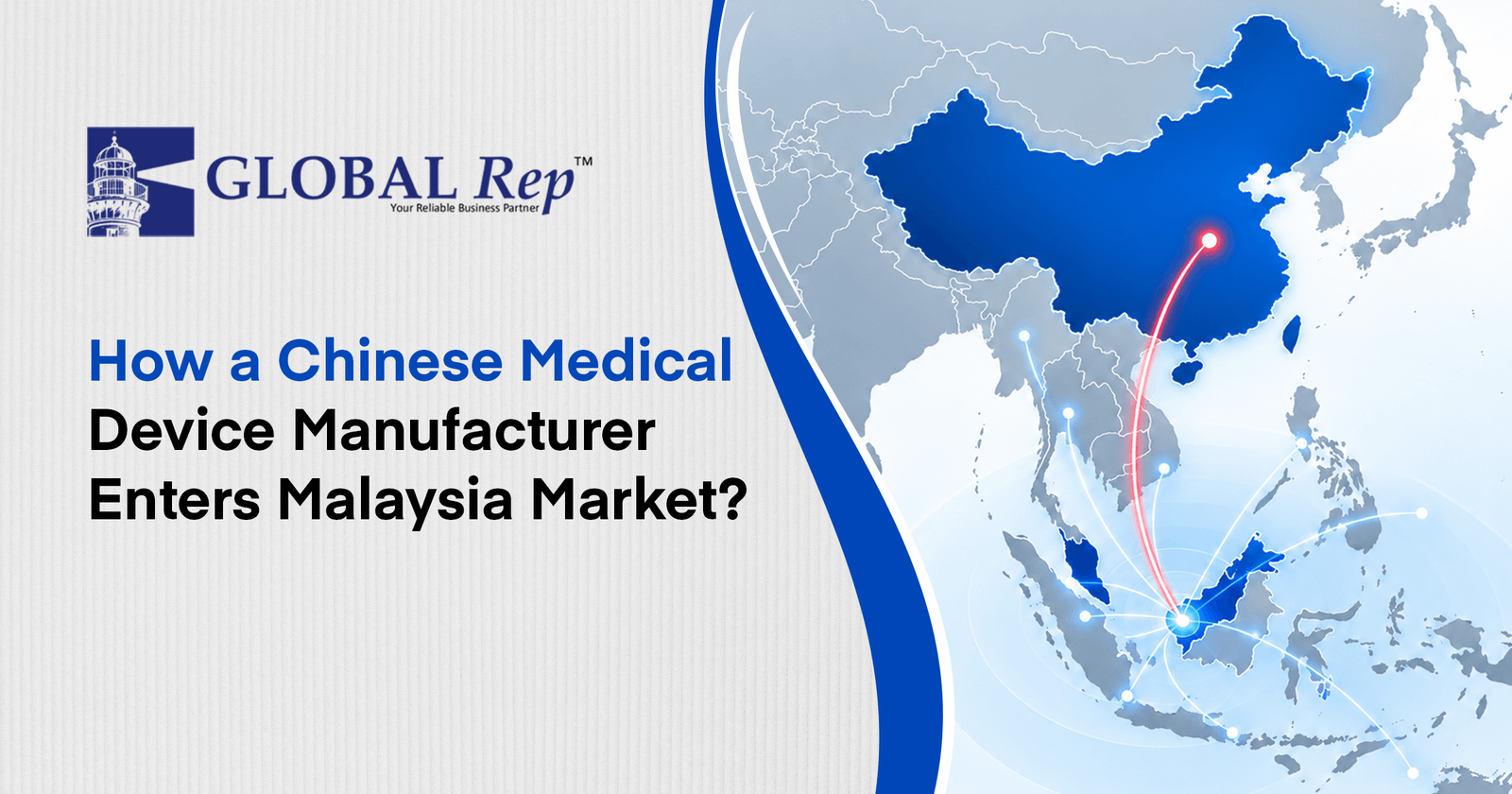

Malaysia’s medical device market is projected to grow to USD 4.5 billion by 2028, with an estimated annual growth rate of 8.5%, making it an attractive destination for medical device companies.
Driven by an ageing population, rising chronic diseases, and increased healthcare spending, Malaysia presents strong opportunities for medical device companies. However, market access requires compliance with local regulatory requirements.
In Malaysia, medical devices are regulated by the Medical Device Authority (MDA) under the Medical Device Act 2012 (Act 737), which establishes the legal framework for the registration, importation, distribution, and post-market control of medical devices.
This article walks through everything from the regulatory framework and classification to registration steps, common challenges, and best practices. It provides manufacturers with a clear roadmap to medical device regulatory compliance in Malaysia.
Understanding Medical Device Regulatory Affairs
Medical device regulatory affairs is the discipline that ensures medical devices are developed, approved, and marketed in compliance with national and international regulations. It serves as the critical link between manufacturers, quality systems, and regulatory authorities to safeguard patient safety, enable legal market access, and maintain ongoing compliance.
In practice, medical device regulatory affairs encompasses all activities required to keep devices safe, effective, and legally compliant throughout their lifecycle — from design and development through regulatory approval to post-market surveillance. It is the bridge that connects innovation with regulatory oversight, ensuring that medical devices reach patients responsibly and remain compliant once in use.
Key Laws Governing Medical Devices in Malaysia
In Malaysia, medical devices are regulated by the Medical Device Authority (MDA), a statutory body under the Ministry of Health (MOH). The MDA safeguards public health by ensuring compliance across the entire lifecycle of medical devices — from pre-market evaluation and market authorization to post-market surveillance.
The core legal framework includes:
- Medical Device Act 2012 (Act 737) — highest-level governance framework for medical devices. It establishes the legal foundation for how medical devices are regulated, marketed, and monitored in the country.
- Medical Device Regulations 2012 — subsidiary laws under Malaysia’s Medical Device Act 2012 (Act 737). It provides the detailed rules and procedures for how medical devices must be registered, licensed, and monitored.
- MDA circular letters — official policy documents to clarify, update, or announce regulatory requirements.
- MDA Guidance documents — practical documents that explain how to comply with the law.
Medical Device Classification in Malaysia
| Device Class | Risk Level | Assessment and Registration Requirements |
|---|---|---|
| Class A | Low risk | Exempt from CAB assessment. Registration applications are submitted directly to MDA through MeDC@St with the required supporting documents. |
| Class B | Low–moderate risk | Requires assessment by an MDA-registered CAB before registration submission. Full conformity assessment or verification applies, depending on eligibility. |
| Class C | Moderate–high risk | Requires CAB assessment before registration submission, with supporting evidence appropriate to the device’s risk and intended purpose. |
| Class D | High risk | Requires CAB assessment before registration submission, with supporting evidence addressing the device’s higher risk and applicable safety, performance and quality management requirements. |
In Malaysia, a “medical device” is defined under the Medical Device Act 2012 (Act 737) as any instrument, apparatus, implement, machine, appliance, implant, reagent, software, material, or other similar article intended by the manufacturer to be used, alone or in combination, for human beings to diagnose, prevent, monitor, treat, or alleviate disease, injury, or disability.
Medical device classification is the cornerstone of the pre-market approval process, as it defines the risk category of a device and determines the conformity assessment pathway required for product registration.
This classification aligns with ASEAN harmonization principles — the same categories used across the region. The higher the class, the more scrutiny and documentation are required during registration.
How to Meet Malaysia’s Medical Device Registration Requirements?
Step 1: Medical device?
Assess whether the product meets the definition of a medical device under Malaysia’s Medical Device Act 2012.
Step 2: Risk classification
Determine the device’s risk classification (Class A, B, C, or D) according to the risk classification criteria.
Step 3: Prepare submission dossier
Establish comprehensive technical documents conforming with the Medical Device Regulation 2012 and associated requirements.
Step 4: Conformity assessment by CAB
Appoint an MDA registered CAB to assess the dossier of Class B, C & D devices.
Step 5: MDA evaluation
Submit CAB’s device conformity assessment certificate and report, and dossier to the MDA’s online platform – MeDC@St, for MDA evaluation.
Step 6: Device registration approval
Upon successful evaluation, the MDA issues registration approval. The device is then legally permitted to be marketed and distributed in Malaysia.
Who Needs to Comply with Malaysia Medical Device Regulations?
The Medical Device Act 2012 (Act 737) requires all medical device establishments, including local manufacturers, authorized representatives, importers, and distributors (including tendering agents), to comply with the Act and all applicable regulatory requirements. Establishments must obtain a valid licence from the Medical Device Authority (MDA) before carrying out their respective activities.
Any establishment that fails to comply with the regulatory requirements commits an offence and, upon conviction, may be liable to a fine of up to MYR 200,000, imprisonment for a term of up to 2 years, or both.
Manufacturer
(a) a person who is responsible for (i) the design, production, fabrication, assembly, processing, packaging and labelling of a medical device whether or not it is the person, or a subcontractor acting on the person’s behalf, who carries out these operations; AND (ii) assigning to the finished medical device under his own name, its intended purpose and ensuring the finished product meets the regulatory requirement;
OR (b) any other person who (i) assembles, packages, processes, fully refurbishes, reprocesses or labels one or more ready-made medical devices; AND (ii) assigning to the ready-made medical device under his own name, its intended purpose and ensuring the finished product meets the regulatory requirements, BUT SHALL NOT include the following persons: (a) any person who assembles or adapts medical devices in the market that are intended for individual patients; AND (b) any person who assembles, packages or adapts medical devices in relation to which the assembling, packaging or adaptation does not change the purpose intended for the medical devices.
Authorized representative
A Malaysian-licensed establishment appointed by a foreign medical device manufacturer to act on its behalf and assume regulatory responsibilities for medical device registration, market placement, and post-market compliance in Malaysia.
Importer
An importer is a person or company appointed by an AR to import medical devices registered by the AR from foreign country into Malaysia.
Distributor
Any natural or legal person in the supply-chain who, on his own behalf, places a medical device on the market and further the availability of the medical device to the end user including persons in the supply-chain involved in activities such as storage and transport on behalf of the authorized representative, importer or distributor.
Tendering Agent
A person or firm that participates in the tendering process to supply medical device(s) and does not carry out activities as manufacturer, AR, distributor, or importer of the medical device(s). Tendering agent is a person or a firm authorised by any establishment ONLY to participate in the tendering process in healthcare institutions.
Do Foreign Manufacturers Need a Malaysian Authorised Representative?
Any foreign medical device manufacturer intending to place its products on the Malaysian market shall appoint a licensed local Authorized Representative (AR) established in Malaysia.
The AR serves as the manufacturer’s legal representative in Malaysia and is responsible for obtaining medical device registration from the Malaysia Medical Device Authority (MDA), facilitating market access, and ensuring compliance with applicable post-market surveillance, vigilance, reporting, and regulatory requirements throughout the device’s lifecycle, and remain accountable to the Malaysia Medical Device Authority (MDA).
Further insight about local authorized representative: Medical Device Registration Holder Options: Local Authorized Representative vs Distributor
Medical Device Registration vs Establishment Licensing
An establishment licence authorizes an establishment to perform its designated regulatory role as a local manufacturer, authorized representative, importer, distributor, and/or tendering agent. In contrast, medical device registration provides market authorization for a medical device to be placed on the Malaysian market and supplied commercially.
The legal responsibility for obtaining and maintaining a medical device registration rests solely with the licensed local manufacturer in the case of locally manufactured medical devices, or the licensed authorized representative appointed by the foreign manufacturer in the case of imported medical devices.
Importers, distributors, and tendering agents may only conduct activities within the scope of their respective licences and are not authorized to register medical devices with the Malaysia Medical Device Authority (MDA).
Full Conformity Assessment vs Verification
In Malaysia, medical devices are classified into four risk-based classes: Class A, Class B, Class C, and Class D. For Class A medical devices, the registrant, namely the licensed local manufacturer or licensed Authorized Representative (AR), may apply for medical device registration without undergoing conformity assessment by a Conformity Assessment Body (CAB). However, for Class B, Class C, and Class D medical devices, conformity assessment by a CAB is mandatory prior to registration.
The Malaysia Medical Device Authority (MDA) provides two conformity assessment pathways for Class B, C, and D medical devices: (1) Full Conformity Assessment, and (2) Verification.
The Full Conformity Assessment route is generally required for Class B, C, and D medical devices that have not obtained pre-market approval from any of the MDA’s recognized reference regulatory authorities, including the US FDA, EU Notified Bodies, Australia’s TGA, Japan’s MHLW, the UK’s MHRA, Health Canada, Singapore’s HSA, and Thailand’s FDA.
For Class B, C, and D medical devices that have already received pre-market approval from one of the MDA’s recognized reference regulatory authorities, the Verification route may be utilized. This pathway leverages existing regulatory approvals and typically offers a shorter assessment timeline and lower conformity assessment costs compared to the Full Conformity Assessment route.
Common Challenges and Mistakes
Even with a clear process, manufacturers often encounter common hurdles:
1. Misclassification of Devices
Assuming a device falls under the same risk class as in another jurisdiction—without referencing Malaysian classification rules—can result in inappropriate regulatory pathways and significant delays in registration.
2. Incorrect Grouping of Devices
Device grouping that does not meet the criteria outlined in the MDA guidance document often leads to rejection or requests for resubmission.
3. Documentation Discrepancies
Frequent causes of queries by the CAB and MDA include typos in critical information (device name, product identifier), missing required documents, insufficient pre-clinical studies, incorrect, contradictory, or incomplete labeling content, documents lacking company name or approval details.
4. Late CAB Engagement
Delaying the appointment of a Conformity Assessment Body (CAB) can stall the entire submission cycle. Early engagement is essential to align expectations, timelines, and requirements.
5. MeDC@St Submission Errors
Common issues flagged by evaluators include typos in device name, product identifier, manufacturer name, or address, incomplete uploading of required documents These errors often cause applications to be returned for rectification, prolonging approval timelines.
6. Failure to Address Assessor Queries and Poor Communication
Responsibilities After Medical Device Registration
Device approval is not the end of your regulatory responsibilities. Manufacturers must maintain compliance through:
- Actively collect device safety and performance information
- Submit information demanded by MDA
- Submit device change notification
- Retaining complete distribution records
- Vigilance and reporting of adverse incidents
- Renewing device registration every five years
- Responding to MDA requests for information
Active post-market surveillance protects patients and ensures your product remains compliant as regulations evolve.
ISO 13485 and GDPMD: Which Applies to Your Business?
The Malaysia Medical Device Authority (MDA) requires all medical device establishments, including local manufacturers, authorized representatives, importers, distributors, and tendering agents, to obtain a valid establishment licence before carrying out their respective activities.
To obtain an establishment licence, an organization must first determine its intended regulatory role(s), as each role is subject to specific licensing requirements and prerequisite certifications.
Local Manufacturer: The establishment shall demonstrate compliance with the requirements of the ISO 13485 Quality Management System (QMS). The certification shall be issued by a Conformity Assessment Body (CAB) registered with the Malaysia Medical Device Authority (MDA).
Authorized Representative (AR), Importer, Distributor, and Tendering Agent: The establishment shall demonstrate compliance with the requirements of Good Distribution Practice for Medical Devices (GDPMD) through certification issued by an MDA-registered Conformity Assessment Body (CAB).
Compliance as a Cornerstone of Market Success
Understanding and executing the medical device approval process in Malaysia is essential for manufacturers who want successful market entry and sustained commercial presence. Through careful planning, accurate classification, solid documentation, and ongoing regulatory diligence, you can build a compliance pathway that protects patients and supports business goals.
FAQ
What is a medical device under Malaysian regulations?
A medical device is any instrument, apparatus, machine, implant, reagent, software, material, or other similar article intended by the manufacturer to be used for medical purposes such as diagnosis, prevention, monitoring, treatment, or alleviation of disease.
Which authority regulates medical devices in Malaysia?
Medical devices are regulated by the Medical Device Authority (MDA), under the Ministry of Health Malaysia.
What legislation governs medical devices in Malaysia?
The primary legislation governing medical devices is:
- Medical Device Act 2012 (Act 737)
- Medical Device Regulations 2012
- Relevant guidance documents issued by the MDA
Can foreign manufacturers directly register medical devices in Malaysia?
No. Foreign manufacturers must appoint a Local Authorized Representative (AR) established in Malaysia to register and maintain their medical devices registration.
Is medical device registration mandatory before marketing in Malaysia?
Yes. Unless specially approved, a medical device must be registered with the MDA before it can be imported, distributed, or supplied in Malaysia.
Get Help Meeting Malaysia Medical Device Regulations
Navigating Malaysia’s medical device regulatory requirements can be complex, from device classification and documentation to CAB assessment and MDA registration. Our team can support you throughout the entire regulatory process to ensure smooth compliance and faster market entry. Contact us today to get expert guidance and streamline your approval journey with confidence.