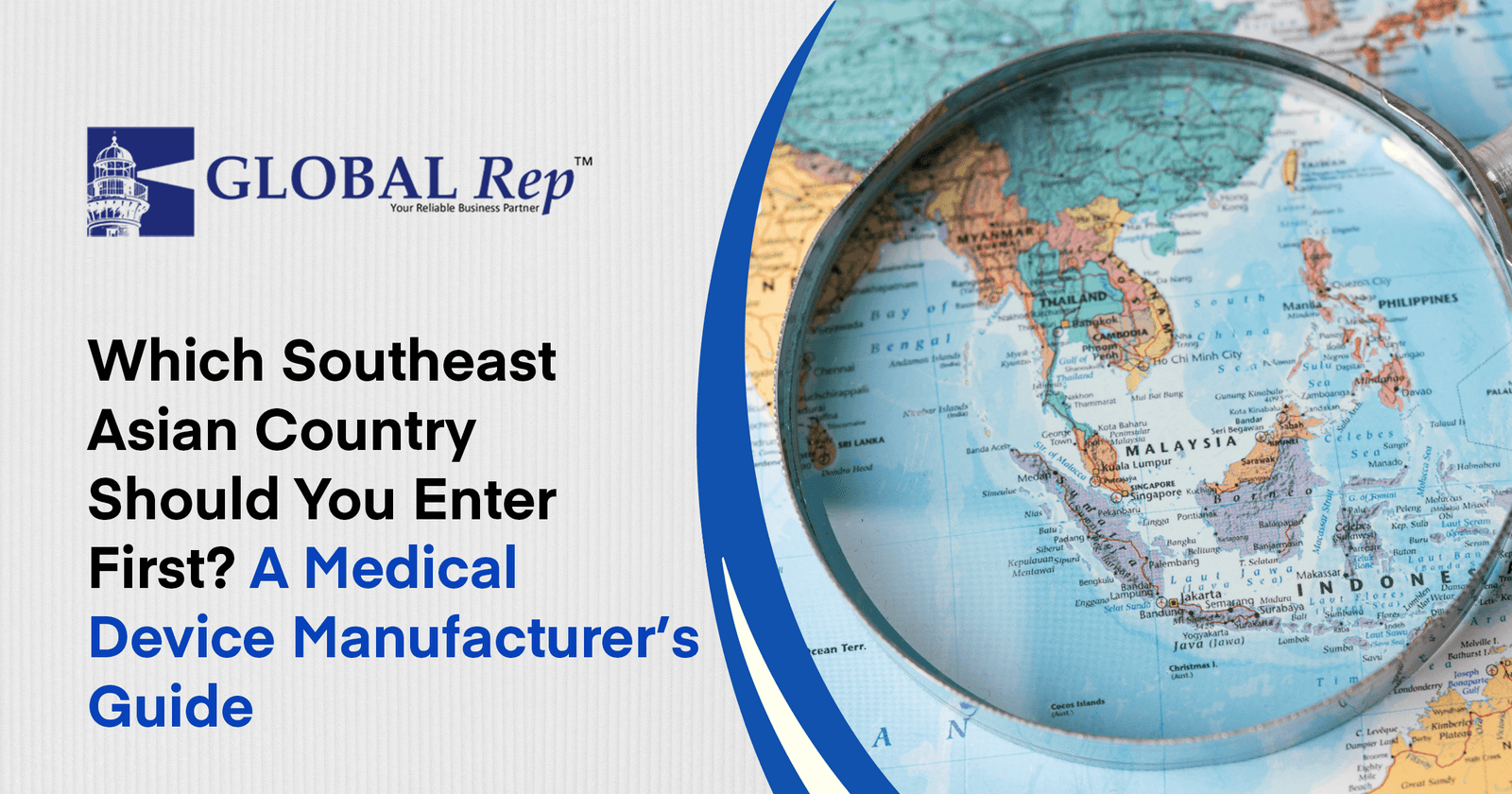
For a medical device manufacturer planning to expand into Southeast Asia, one of the first questions is often: “Which country should we enter first?” Malaysia? Singapore? Indonesia? Thailand? The Philippines? Brunei? There is no universal answer.
The largest market is not necessarily the best first market. The right starting point depends on your product, regulatory status, commercial objectives, available resources, local partners and long-term regional strategy.
A well-chosen first market can do more than generate your first sales. It can help you build regulatory experience, establish distribution, understand customer needs and create a foundation for expansion across Southeast Asia.
Six Markets, Six Different Opportunities
|
Factor
|
Malaysia
|
Singapore
|
Thailand
|
Indonesia
|
Philippines
|
Brunei
|
||||||
|---|---|---|---|---|---|---|---|---|---|---|---|---|
|
Market opportunity
|
Attractive
|
Smaller
|
Large
|
Very large
|
Large
|
Small but focused
|
||||||
|
Healthcare ecosystem
|
Developed
|
Highly developed
|
Developed
|
Developing
|
Developing
|
Developed
|
||||||
|
Regulatory maturity
|
Established
|
Highly developed
|
Established
|
Developing
|
Developing
|
Developing / evolving
|
||||||
|
Regional gateway potential
|
High
|
Very high
|
High
|
High
|
High
|
Limited
|
||||||
|
Relative market-entry cost
|
Accessible
|
Higher
|
Moderate
|
Moderate–higher
|
Moderate
|
Moderate
|
||||||
|
Local partner importance
|
High
|
High
|
High
|
High
|
High
|
Very high
|
||||||
|
Market accessibility
|
Accessible
|
Accessible
|
Moderate
|
More complex
|
Accessible
|
Focused
|
||||||
|
Strategic role
|
Practical entry point
|
Regional hub
|
Mainland SEA expansion
|
Large-market expansion
|
English-speaking SEA market
|
Focused, high-value market
|
||||||
|
Best suited for
|
Market testing & regional expansion
|
Regional positioning
|
Mainland SEA opportunities
|
Scale & long-term growth
|
English-speaking market development
|
Specialised opportunities & targeted sales
|
||||||
This following is a strategic comparison, not a ranking. The most suitable first market will vary from one manufacturer to another.
|
Country
|
Strategic opportunity
|
May suit manufacturers looking to...
|
||
|---|---|---|---|---|
|
Malaysia
|
Practical regional entry point
|
Test the market and build an ASEAN foundation
|
||
|
Singapore
|
Regional hub & highly developed healthcare market
|
Build regional credibility and serve sophisticated customers
|
||
|
Indonesia
|
Large long-term opportunity
|
Access a substantial and growing market
|
||
|
Thailand
|
Major mainland Southeast Asian market
|
Develop healthcare and private-sector opportunities
|
||
|
Philippines
|
Large English-speaking market
|
Build an accessible English-speaking commercial market
|
||
|
Brunei
|
Small, high-income market
|
Pursue targeted opportunities with a focused strategy
|
||
1. Malaysia — A Practical Starting Point
Malaysia can be an attractive starting point for foreign medical device manufacturers that want to establish a presence in Southeast Asia without immediately committing substantial resources to a large regional operation.
Malaysia has an established medical device regulatory framework administered by the Medical Device Authority (MDA).
A foreign manufacturer can appoint a Malaysian Authorized Representative (AR) to represent it for regulatory purposes, while licensed importers and distributors can support its commercial activities.
This means a manufacturer can potentially establish a Malaysian market presence without setting up its own Malaysian company.
Malaysia may therefore be particularly suitable for manufacturers that want to:
- test the Southeast Asian market;
- establish their first local regulatory presence;
- work with local importers and distributors;
- build regional experience; and
- use Malaysia as a foundation for subsequent ASEAN expansion.
Malaysia is also becoming increasingly relevant from a regulatory-reliance perspective, making it important for manufacturers to assess how existing international approvals and regulatory evidence may support their Malaysian pathway.
2. Singapore — A Regional Hub
Singapore is a relatively small market in population terms, but its healthcare ecosystem, infrastructure and international connectivity make it strategically important.
For manufacturers targeting:
- sophisticated healthcare institutions;
- private healthcare groups;
- regional headquarters;
- strategic partnerships; or
- high-value medical technology markets,
Singapore can be an attractive starting point.
Singapore’s Health Sciences Authority (HSA) has an established medical device regulatory framework, including different evaluation routes depending on the device and the manufacturer’s regulatory history.
Singapore can also provide strong regional positioning for companies that want to use Southeast Asia as part of a broader international strategy. However, the relatively small market and higher operating costs mean that Singapore may not be the most appropriate first market for manufacturers primarily seeking volume.
3. Indonesia — The Large-Market Opportunity
Indonesia offers one of the most significant long-term market opportunities in Southeast Asia.
Its large population and growing healthcare needs make it attractive for manufacturers seeking substantial commercial potential.
But market size alone should not determine your first-market decision. Entering a large and geographically dispersed market can require significant investment in:
- regulatory compliance;
- local partnerships;
- distribution;
- logistics;
- customer development;
- technical support; and
- after-sales service.
For manufacturers with limited experience in Southeast Asia, it may be strategically sensible to establish experience in another market first.
4. Thailand — A Gateway to Mainland Southeast Asia
Thailand is one of the region’s important healthcare and medical device markets.
Its healthcare sector includes both public and private healthcare, while its established medical tourism industry creates additional opportunities for certain medical technologies.
Thailand may be particularly relevant for manufacturers targeting:
- hospitals;
- private healthcare groups;
- specialised medical services;
- medical tourism; and
- mainland Southeast Asian markets.
A strong local distributor or established customer relationship can significantly influence whether Thailand is the right first market.
5. Philippines — A Large English-Speaking Market
The Philippines offers another attractive entry point for international medical device manufacturers.
Its large population and widespread use of English can make commercial communication and relationship building relatively accessible for international companies.
The healthcare market includes significant private-sector participation, creating opportunities for manufacturers with the right products, pricing and local partners.
Medical devices are regulated by the Philippine Food and Drug Administration (FDA), and manufacturers should assess the applicable regulatory requirements before selecting the Philippines as their entry market.
For manufacturers whose regional strategy places particular importance on English-speaking markets, the Philippines can be a compelling starting point.
6. Brunei — A Focused, High-Income Market
- specialised medical devices;
- premium products;
- government or institutional opportunities;
- existing relationships in the country; or
- a distributor capable of covering the market efficiently.
Don’t just ask, “Which Southeast Asian country should we enter?”
Ask, “Which country should we enter first to build our Southeast Asian business?”
Think Regionally, Not Country by Country.
You may consider your current status by asking the following questions:
- Can I enter the market efficiently?
- Can I actually sell there?
- Do I already have regulatory evidence?
- Do I have the right local partner?
- What market do I want to enter next?
Start with the right market. Build the right foundation. Then expand with confidence.
Global Rep is a Malaysia-based medical device regulatory affairs company providing independent local Authorized Representative (AR) services to foreign medical device manufacturers, together with comprehensive regulatory support for local establishments.
With a strong foundation and established presence in Malaysia, we serve as a reliable regulatory partner throughout the medical device lifecycle—from market entry to ongoing compliance. Our services include medical device registration and registration maintenance, local authorized representative for medical devices, importer and distributor appointment, post-market surveillance, and support for GDPMD certification and ISO 13485 certification.
With Global Rep, foreign manufacturers can navigate Malaysia’s regulatory requirements with confidence while maintaining greater control, flexibility, and continuity in their market strategy.